Duel Honda CB1000R 2018 Vs Triumph Speed ​​Triple RS: chic duo for shock duel

Two new maxiroadsters arrive last year: The CB1000R, highly anticipated at Honda and the Speed ​​Triple, surprise of Triumph. Two motorcycles with similar approaches who compete against MNC: on the way to a duel of beautiful and rebellious! The readers rebelsnreaders.blogspot.com who, as everyone knows, have a little more RAM than others, remember that Honda had taken its time to replace the Hornet 900 with the CB1000R: for two long years (2006- 2007), the catalog of the winged coat of arms no longer displayed a maxiroadster!

Strangely, the success of the CB1000R was also slow: due to the entry into force of the Euro 4 emission standard, the Tokyo Reds did not offer any bikes last year against the Kawasaki Z1000, GSX-S1000 Suzuki or MT-10 from Yamaha.

Duel Honda CB1000R 2018 Vs Triumph Speed ​​Triple RS: chic duo for shock duel


Duel Honda CB1000R 2018 Vs Triumph Speed ​​Triple RS: chic duo for shock duel

This slight misfortune, Honda intends to fill it by taking the opposite of its compatriots. At least in terms of look! If it remains true to the 4-cylinder line, the new "Cebe" and its touch "retro" actually break with the - recent - tradition of Japanese machines that seem straight out of manga.

Although the first CB1000R has already been designed "in Europe, by Europe and for Europe", the second adopts much more "Western" features. It is in this that it is close to another great novelty, much more unexpected this one: the Speed ​​Triple 2018 which, despite the "Brexit", remains a reference in terms of roadster on the old continent!

MNC test - Honda CB1000R 2018: Universe change
Triumph Speed ​​Triple RS 2018 MNC test: the roadster raises the tone and sound

Deeply revised in 2016, the maxiroadster has evolved again this year. His "Tripeul" was at the center of attention Hinckley firm: the 3-cylinder 1050 cc now develops 150 horses, against 145.5 ch for the 4-legged 998 cc of the CB1000R, derived from the engine Fireblade 2017.

While maintaining a relatively reasonable maximum power, the Speed ​​stands out from its own European rivals: Aprilia's Tuono V4 twin and KTM's 1290 Super Duke R spew respectively 175 and 177 hp, the 4-in-line of the BMW S1000RR comes out 165 hp.

Duel Honda CB1000R 2018 Vs Triumph Speed ​​Triple RS: chic duo for shock duel

As everyone knows, are a little more demanding than the others will miss the Ducati Monster 1200S whose philosophy of motorcycle looks neat, powerful-but-not-scary engine and the Honored cycle part could have joined this duel. But this is not a 2018 novelty! And incidentally, we could not try it in 2017.

The confrontation between the new Honda and Triumph seemed unavoidable: on the one hand, the second novelty preferred by readers, on the other, one of the biggest favorite editorial this new Year. A nice duel in anticipation!

Only problem (noted by some commentators informed on our smart-videos), the two roadsters were entrusted to us by their respective importers in different versions: Honda France kindly lent us a CB1000R with quickshifter but without "+", while Triumph France kindly passed a Speed ​​Triple RS with "shift assist" as well. Moto-Net.Com will try to take this into account.

CB1000R 2018: the Honda + expected
For this duel unpublished here- as on all the canvas -, the testers received the keys of a brand new CB1000R 2018: its odometer displays only 40 km at our departure! Completely original, this machine has the services of a quickshifter (to 695 euros) to go up and down the reports without resorting to the clutch lever.

CB1000R 2018: the Honda + expected


But this accessory is the only one that distinguishes the standard model from its "+" version in terms of dynamic behavior. Indeed, the heated grips, aluminum fender inserts, wind deflectors, saddle bonnet and radiator grille do not change the acceleration, braking or handling of the motorcycle.

Duel Honda CB1000R 2018 Vs Triumph Speed ​​Triple RS: chic duo for shock duel

rebelsnreaders.blogspot.com , which has already been tested on the real CB1000R + during its press launch, can therefore estimate that it is running on the high-end version of the all-new Honda roadster, invoiced at 14,699 euros, ie 1,500 euros more than the CB1000R " anyway".

Even without a few "plus" skins, the CB1000R remains a magnificent motorcycle: its engine benefits from an exemplary finish. The finely and partially polished housings echo at the level of the hub of the rear wheel carried by the massive single-arm all aluminum.

Duel Honda CB1000R 2018 Vs Triumph Speed ​​Triple RS: chic duo for shock duel

The black color of the beast is also perfectly associated with the beautiful brushed aluminum parts of the headlight, the radiator and the air box. Aluminum also, but as cut in the mass, the plates of footrest before could perhaps have gained to be openwork. They are none the less admirable.

The frame is steel, but its configuration "mono backbone" (backbone!) Makes it completely invisible: the engine is even more valuable! Ditto for the rear rim design that oscillates between classy and aggressive: the wheel is not too hidden by the compact pot that MNC did not find terrible in the photos, but who likes in the end!

Duel Honda CB1000R 2018 Vs Triumph Speed ​​Triple RS: chic duo for shock duel

The general line of the "Cébé" is also very successful, alternating classic touches and modern spikes, avoiding mistakes of taste. The round, flat lighthouse is equipped with modern LED lighting, whose night lights evoke a horseshoe. There is a second iron in the back: the Japanese want to put the odds on both sides of their bike!

The tank levitating above the mill hides its welds carefully. Pretty flat, it also seems particularly long where the touch of gray paint "alu" just in front of the saddle of the pilot ?! The rear of the machine is aerial: the passenger seat is placed on a back loop whose perfectly smooth finish makes superfluous any plastic cladding.

Duel Honda CB1000R 2018 Vs Triumph Speed ​​Triple RS: chic duo for shock duel

This first review of the Red is it all rosy? No. For example, it is regrettable that Honda has mounted mirrors of pentagonal shape, today rather banal. At

rebelsnreaders.blogspot.com, we find that retro rounds would have been more in the tone. Not chrome either, just round.

Similarly, if we can congratulate the Reds for having adopted a remote plate support that accentuates the truncated appearance of the rear loop, we can also wonder about the need to split it. One arm was not enough to carry the license plate and the tiny fender?

Duel Honda CB1000R 2018 Vs Triumph Speed ​​Triple RS: chic duo for shock duel

By inspecting the Honda very, very closely,

rebelsnreaders.blogspot.com is surprised that the electronic engine injection system is so apparent on the left, that a strand of black cable strolls under the saddle of the driver and that the Expansion tank is under the shock absorber and above the "pot" of the muffler!

Finally, the front mudguard of "our" seems a bit basic in its shape - retro look, why not - and much too much in its raw plastoc finish. But the CB1000R + only partially corrects this fault menu with its aluminum inserts. This is not the same "halu" as the Speed ​​Triple which has a carbon fender in its version " RS ", we come here!

Speed ​​Triple 2018: the Triumph surprise
Triumph has given us the key - contactless! - a Speed ​​Triple RS, the "top" model 2018 tested and approved by Moto-Net.Com this winter. Unfortunately for the Journal moto du Net, for its readers and for Triumph (also, yes!), No standard model was available to measure the CB1000R "a little +".

It is therefore in her haute couture and big brands that the Speed ​​is aligned for this duel. So she leaves with a serious handicap: its price of 15,850 euros, enhanced by 429 euros for the quickshifter ("up / down", as on the Honda) that does not even appear in the original endowment of the RS. "What The Flute"?!

Speed ​​Triple 2018: the Triumph surprise


Duel Honda CB1000R 2018 Vs Triumph Speed ​​Triple RS: chic duo for shock duel

However, compared to the extra 1500 euros that cost the CB1000R + compared to the CB1000R "any short", the 2050 euros required by Triumph to acquire a Speed ​​Triple RS rather than a Speed ​​Triple S seem perfectly justified.

The "Spideresse" includes a beautiful pair of Arrow titanium and carbon pots (1299 euros in the catalog), Öhlins suspensions (which replace the Showa of the "Spidesse"), adjustable levers (doubling to the right, in spacing and offset !) signed MCS and a Continental electronics with inertial unit (the "famous" IMU Superbike)

Duel Honda CB1000R 2018 Vs Triumph Speed ​​Triple RS: chic duo for shock duel

In addition to these electro-mechanical improvements a painted engine shoe, a fender and carbon radiator scoops, small wheel axle hubcaps or on the frame and even without these little tricks, the standard Triumph clearly has nothing to blush in the face of the sculptural Honda in terms of finish.

Less refined than those of its Japanese competitor, the lines and shapes of the English are generous and curved. The "devastating" look of the Speed ​​is carefully preserved by Triumph over the years, rightly so: it seduces the majority of motorcyclists crossed by rebelsnreaders.blogspot.com. It is also unanimous within the writing

rebelsnreaders.blogspot.com!

Duel Honda CB1000R 2018 Vs Triumph Speed ​​Triple RS: chic duo for shock duel

Installed on the beautiful beast for 20 years (!), The double headlights that are no longer round since 2011 are faithful to the post, as are the two escapes under the saddle, as impressive as they are essential. "What did you expect"? The rims on the other hand are redesigned for 2018: the five sticks offer them a delectable flavor "ultralight".

In addition to these new wheels, the S and RS versions of the new triple triple also share the front Brembo (Nissin rear) braking system with aviation-type hoses, as well as the Pirelli Supercorsa SP tires with super-sticky tires, please!

Duel Honda CB1000R 2018 Vs Triumph Speed ​​Triple RS: chic duo for shock duel

To summarize: the Speed ​​S is a bike that "marks", the Speed ​​RS is one that "re-brands" even more! At the same time, there are multiple inscriptions "Triumph" or "T" scattered on the maxiroadster produced in Hinckley, England. More classy then, than the label "Made in Thaïland" worn by the little brothers Street Triple!

Common to the Speed ​​S and RS also, the mirrors at the end of the handlebars bring them a coffee Racer touch that may not be denied by future buyers of CB1000R, spearhead of the new segment "Neo Sports Café" at Honda! Stylish, they are very effective and not too disabling in the city.

Duel Honda CB1000R 2018 Vs Triumph Speed ​​Triple RS: chic duo for shock duel

Is the new Speed ​​Triple perfect from an aesthetic point of view? "Well, nobody's perfect!" Thus, the ABS plant and its channels (like gas plant) and the gasoline vapor filter (tin style "ptipoicarote") would have deserved to be too well camouflaged than the injection of the Modern Classics range (like carburetors!).

Another detail - but on a motorcycle charged 16,279 euros, we can quibble! -: The "aluminum" color of the rear loop is unnecessarily different from the deep gray of the frame and the passenger footrests. Same for the Brembo front brake mounting bracket that is not painted black, like the handlebar and the rest of its hardware. "Shocking".

Duel Honda CB1000R 2018 Vs Triumph Speed ​​Triple RS: chic duo for shock duel

Let us note to conclude that the passage of the cables around the steering column is a little cleaner on the Triumph than the Honda. More disturbingly, the left rear flashing of "our" Speed ​​bathed in the water. This did not prevent him from working during our two days of driving. Will it be two decades?

It is high time to climb on our maxiroadsters who form a particularly chic duo in static and a "duel of shock" in dynamics? Answer on page 2 of our new MNC duel: in the saddle!

Kawasaki Z125 and Ninja 125 trial: Z or ZX-R?

Unveiled in September, the Z125 and Ninja 125 land in mid-December concession. Kawasaki allowed us to try out its two new 2019 features on the road then on the track (s) with Ana Carrasco, world champion Supersport 300. Roulez jeunesse!


The MT125, 125 Duke, CB125R on one side, YZF-R125, GSX-R125 or RS4 on the other ... The holders of the A1 license were already spoiled for choice in terms of small roadsters or mini sports. But Kawasaki complicates the deal by returning to the 125cc motorcycle market with two new 2019!

Two weeks before Christmas, the Akashi company will market a new offer generated by strong demand: " our Z125 and Ninja 125 are designed exclusively for Europe, at the request of our dealers and their customers ", we learn Japanese and European Kawasaki.

Special report MNC : All new products 2019
Ninja 125 and Z125 : Kawasaki rejuvenates its 2019 motorcycle range
Presumably jealous of the sales of their fellow red, blue or orange on the Old Continent, the Greens have decided to reinvest this important segment - not to say capital, since the bikers most often maintain a special relationship with the brand that put them the boot on the footrest.

For Kawasaki, it is actually a second return on the 125 cc segment: in 2010 already, the Japanese brand had revived the assault of young bikers (from 16 years) with two models: the KLX and D-Tracker, which shared the same basic mechanics.

 Kawasaki Z125 and Ninja 125: for bikers of generation Z or ZX-R?

Unfortunately for Kawa, the trail 125 and its supermotard version have never managed to replicate the success of the KMX and KDX another "2-stroke" ... At the forefront of fashion in the 90s, this type of gear does not make any more recipe. Ditto for the customs 125: a new generation of Eliminator was eliminated automatically!

To bait and iron the "youth" of the twenty-first century, motorcycle manufacturers have better interest in imitating their best-sellers of medium or large capacity. That's why Kawasaki is launching this year a mini Zed and a little Ninja!

 Kawasaki Z125 and Ninja 125: for bikers of generation Z or ZX-R?

In France, the roadster Z will undoubtedly attract more customers than the Ninja sports: " we count on 80% of Z125 and 20% of Ninja 125 ", confirms Antoine Coulon, marketing and communication manager at Kawasaki France while in Paris. other countries (mainly in Great Britain), the proportions could be reversed.

According to surveys conducted prior to the project, the main reason for buying a 125cc motorcycle is style (37% of customers). From this point of view, Kawasaki scores big points since the Z125 looks like a Z900! In the color white / black, the relationship is even particularly striking ...

 Kawasaki Z125 and Ninja 125: for bikers of generation Z or ZX-R?

The lines - which start from the top of the tank, go down on the saddle and go back to the saddle the passenger jump seat - are almost superimposable! The frames in steel tubes do not have the same features, but their special shade in green "tart apple" skillfully bring them together.

It is regrettable, however, that the boiling of the small Zed does not look more like that of the 900: front view, the little "Kawette" looks more like Honda 600 Hornet! Similarly, we would have appreciated that the muffler is shorter on the Z125, even if it is larger as is the case on the Z900, precisely.

 Kawasaki Z125 and Ninja 125: for bikers of generation Z or ZX-R?

Axially Mounted Front Caliper and Straight Swingarm: Mini Zed shares two reasonable choices with the Z900. It is also inspired by the Z650 by selecting a "non-inverted" fork, basic but sufficient? MNC will try to check it during this test ...

The brake discs of the Z125 are petal cut, like the vast majority of Kawasaki production (except for the Ninja H2 and ZX-10R which are equipped with Brembo). Does the Ninja 125 do the same? No, because the little sports car does not differ from the roadster in mechanical terms (read our technical point on the last page).

 Kawasaki Z125 and Ninja 125: for bikers of generation Z or ZX-R?

From an aesthetic point of view, the "ZX-R" 125 looks nothing like its older, unlike the Z125 ... and contrary to what we would believe Kawasaki! Only the decoration of the fairings of the special editions "KRT Replica" of the two sports launch a - fragile - bridge between the Superbike and the 125cc.

For 27% of customers, what counts first in the purchase of a 125 is the brand! With its mass of high-performance models, Kawasaki here inscribed other valuable points for its mini Ninja which circulates on a tiny segment: only half a thousand registrations in France last year for all sports 125.

Made for Europe in Indonesia
The overwhelming dominance of Jonathan Rea in World Superbike for four years has also "branded" the minds of amateurs - warned - of motorcycle speed. What to boost sales? In Northern Ireland, Johnny's homeland, maybe. In France, MNC hardly believe it: the Motorcycle Journal of the Net would bet more on a jump of sales in Southeast Asia.

In Malaysia, Thailand or Vietnam, the fervor for motorcycle racing continues to grow. In Indonesia too? Maybe more! This is where the two new Kawasaki 2019 novelties are produced. After all, KTM manufactures its mini Dukes in India, at its partner Bajaj.

 Kawasaki Z125 and Ninja 125: for bikers of generation Z or ZX-R?

Unlike the Yamaha MT and YZF-R125 (among others) coming out of the MBK factory in France, the Z125 and Ninja 125 are not stamped with an estimate "made in France", nor even a consensual "made in Europe ". The Akashi firm answers the most important point for 7% of 125 customers: being financially affordable.

In their solid blue color (pile between the deep blue Yamaha and electrifying blue Suzuki), the mini Z and the small "ZX-R" are respectively displayed at 4599 and 4899 euros (count 100 euros more for decorations more sought). A quick market study puts the two Kawasaki in the middle, no more and no less.

 Kawasaki Z125 and Ninja 125: for bikers of generation Z or ZX-R?

For these prices (that of a recent occasion of average cubic capacity!), We would have liked anyway that Kawasaki pays a little more attention to the finish, painting some engine parts in black for example: radiator, starter and injection bodies denote too much in gray. Similarly, some cables and wires are too obvious.

On the other hand, MNC still does not understand why Kawasaki insists on putting unnecessary - not to say super-ugly - overlaying frames on his Z (125, 650 and 900): caches slipped from below would suffice, no ? Unless the Japanese want to hide too coarse welds? In that case...

 Kawasaki Z125 and Ninja 125: for bikers of generation Z or ZX-R?

Just next door, the driver's footrest plates do much better. On the right, the brake pedal seems rudimentary but its shape and its cut make it perfectly functional. The footrests are generously rubber-lined at the front, but not at the back.

On the handlebars, the small or - very - large size would have appreciated to be able to adjust the spacing of the clutch levers and front brake. However, Moto-Net.Com ensures that the majority of users will be perfectly satisfied with the compromise chosen by Kawasaki.

 Kawasaki Z125 and Ninja 125: for bikers of generation Z or ZX-R?

Like the price, the appearance of big motorcycle is the main asset of a 125 for 7% of bikers ... Again, small Zed and Ninja only half fill the contract: in photo, profile or three-quarter views before, they can make impression.

Facial views on the other hand, from the back or the top, they do not deceive anybody ... And that's good, because these two novelties Kawasaki 2019 should be easy to take "gloves"! Moto-Net.Com will be able to check it by trying them both in the southern tip of Spain, where the temperatures are still soft and the tarmac dry ... but sometimes slippery! In the saddle on the next page,

Duel Aprilia 125 RS4 VS Yamaha YZF-R125: The return to bottom of six!

Duel Aprilia 125 RS4 vs Yamaha YZF-R125

No offense to the purists, the reign of motorcycles 125 sports 4-stroke is now established. So we organized a duel between the two sharpest representatives of this category: The new Aprilia RS4 versus the Yamaha YZF-R125... This the duel of 125cc! Let's the battle begin!

Despite a limited turning radius, the R125 is much more fun to drive in town than its competitor transalpine, mainly thanks to its flexible and available engine. Relatively coupleux, the small block 4-time agrees to resume from 4000 rpm.
Duel Aprilia 125 RS4 vs Yamaha YZF-R125

It is also well supported by a nice 6-speed gearbox, but it will of course not hesitate to play the selector to always stay on the good report! For the rest, the Yamaha manages to completely forget its 138 kg all full facts by offering a nice maneuverability.

The conciliatory Japanese
As on the larger motorcycles, we find on Aprilia an Italian particularism. The RS4 offers less easily than its competitor and to make the most of it in the city, its driver should not be idle!

Duel Aprilia 125 RS4 vs Yamaha YZF-R125

Its engine first is very hollow under 7000 rpm (47 mm stroke against 58.6 on Yam!) And requires constant gear changes to avoid sub-revs. In this, we find the rather capricious side of the old blocks 2-time who were forgiven, however, leaving almost 35 hp!

The gearbox of the RS4 is also not free of blame. On our test bike (barely rode with its 500 km on the meter) the first report refused to lock, requiring two or even three times.

The (bad) Italian character
Between traffic and traffic jams, our two sports are still not in their element of predilection. It is nice to spit in the paws, we are systematically taxed by the X-Max and other S-Wing, both at the start or the game of basting between the lines.

Duel Aprilia 125 RS4 vs Yamaha YZF-R125

As much as possible, we will also shorten as much as possible the motorway stages to find small bucolic roads. Thanks to a better length, the Aprilia takes the advantage to maintain a cruising speed correct (100-110 km / h) and hangs even the 130 km / h meter (125 km / h GPS).

Behind, the Yamaha struggles to stabilize at the same cruising speed. In point on the 6th report, the breaker rather frustrating comes from 123 km / h (118 km / h GPS). We are far from the 200 km / h - or almost, "what are you like gear ?!" - some unrestrained and accessible 2-stroke motorcycles, within a certain weight / power limit, to only big cubes license holders!

It's the job that comes back!
Like their older 2-stroke, the Aprilia RS4 and the Yamaha YZF 125R may be our future drivers. As such, they are a good school for the rider who intends to complete his license A.

Duel Aprilia 125 RS4 vs Yamaha YZF-R125

Look, trajectory, braking, speed curve: the driver is completely focused on what he does, much more than on a scooter that just take you from point A to point B. In turns tight, the battle is tough and relatively balanced between our two "mini-moths".

The Aprilia boasts its bright and efficient chassis and the lengthening of its engine, while the Yamaha puts more on its solid engine and its cycle part a little less lively but ultra reassuring.

Mini engine for great pleasure
Particularly agile with their thin pneumatic tires (130/70 on the rear) and their small wheelbases (1345 mm on the RS4, 1355 on the YZF), the two small sports cars twirl from one turn to the other with a big ease.

Duel Aprilia 125 RS4 vs Yamaha YZF-R125

Too bad that in the famous climb of the 17 turning of the Vallée de Chevreuse, the slightest sub-regime is paid cash: we find ourselves at a standstill! On the other hand in the other direction - downhill! The absence of power is much less penalizing.

The RS4 and YZF-R125 even have something to do with much bigger ones, thanks to their remarkable agility. Both well suspended, they offer a very convincing compromise between comfort and handling.

As for their oversized chassis, they would happily support the double of horses! Finally, note that the tires of Aprilia ("Sava", not the Pirelli Supercorsa press presentation, read our test MNC June 1, 2011: Aprilia RS4 125, the star of the courses (es ) of recreation! ) finally showed up at the level of our small rural arsouilles. Pic by; moto-net.com

Duel KTM 790 Duke VS Kawasaki Z900

Duel KTM 790 Duke VS Kawasaki Z900

The KTM strengthens its offering in the competitive segment of mid-sized roadsters with its unprecedented 790 Duke twin-cylinder engine. To gauge it, the Journal moto du Net opposes it to the best French sale in the category: the Kawasaki Z900. Duel special A2 license, in flanged version at 47.5 hp (35 kW).

Small booster: since June 1, 2016, all future bikers, whatever their age, put the boot on the license A2, intermediate format limited for two years to motorcycles 35 kW (47.5 hp). Permit A without power limitation is only accessible after this period and a paid 7-hour training. Completed the direct access to license A from 24 years old that authorized the old device... 

This questionable constraint, the license B allows him to drive from 18 years all types of cars, including a Bugatti Veyron 1000ch! involves closing many large motorcycles to make them accessible to new motorcycle licenses. Including Sacros-saints roadsters from 700 to 900cc, a popular and competitive category.

Duel KTM 790 Duke VS Kawasaki Z900

As if that were not enough, this clamping is only allowed on motorcycles whose power in free version does not exceed 70 kW (95 hp), which is twice the maximum threshold in A2. In other words: the Z900 and the new 790 Duke are theoretically out of reach of young people, because they develop respectively 125 and 105 hp in Full! 

Fine strategists, the manufacturers however found the parade to adapt their motorcycle too powerful to the requirements of the A2 license: to propose an identical declination, but irreversibly clamped to 95 hp. This is the case of the Kawasaki roadster best selling in its category in Europe in the first half of 2018 and its new rival KTM, opposed here in their A2 configuration of 47.5 hp.

Duel KTM 790 Duke VS Kawasaki Z900

In static, the Orange passes before the Green
Apart from this clamping at 35 kW, the Kawasaki Z900 and KTM 790 Duke "A2" are identical to the standard models. Aesthetics, cycle part and peripherals are exactly the same, as much to flatter the ego as to contain the costs of production. So, no need to build two separate motorcycles as Kawasaki had experienced with the fire Z800e!

Their equipment, however, seems oversized compared to their power limited to 47.5 hp and their status as "first bike". The remark is especially for the KTM: its robust boxed swingarm imposes, as well as its monobloc calipers with radial fixing manufactured by the Spanish manufacturer J. Juan and its optical LED to the shape of horseshoe.

But it is especially in terms of technology that the 790 Duke is illustrated, contiguous to the suffix "L" in version A2 with its electronic throttle, traction control and ABS corner-sensitive, four driving modes and his assistant initially, like sports bikes. It even receives always standard, a bidirectional shifter (up and down without declutching), equipment worthy of a Superbike! 

Duel KTM 790 Duke VS Kawasaki Z900

No rival offers so much to date, but its price is felt: 9490 euros against 9099 euros for the Z900 A2 (currently on sale at 8499 €). Young people will cough... Except that "young license" does not necessarily mean "young biker": the quadra or the fifties A2 with the generally higher purchasing power can ignore these tariffs to afford the fun to start on a bike at the top! 

Still, the Z900 blows the blow against this riot of equipment: it's very simple, except ABS mandatory, the Kawasaki is devoid of any form of assistance! Its axially fixed calipers and swingarm square section reinforce this "basic" appearance against the KTM, which still marks points with its bent valves, reinforced hoses and wide color screen controlled from the handlebars.

The static sleeve of our duel is it folded so far? Not necessarily because the Z900 goes green obviously! Thanks to its finish a notch above, strong of an irreproachable presentation with the exception of the cache in plast (oc) ique on the median part of its tubular lattice. Above all, its suspensions offer an even wider range of settings.

The need for compromises is actually felt in two areas that KTM usually deals with: the quality of depreciation and that of certain materials. Excessively sharp scoops along the tank of the 790 Duke are particularly "cheap", its mirrors seem to date and the electrical circuit could in some places be better integrated.

But the main disappointment comes from its suspensions, very basic despite their provenance from WP (brand KTM): the mono-damper, mounted without link and it is adjustable only preload, while the inverted fork is deadlocked altogether on any form of adjustments. The Z900 has an adjustable preload and trigger at the front and back.

Finally, if "our" test KTM displays skilfully Pirelli Diablo Rosso III (Dunlop Sportmax D214F on the Kawasaki), its original mounts is not normally so sporty: the 790 Duke receives standard Supermaxx ST tires from at Maxxis, Taiwanese manufacturer renowned in the world of cycling and off-road motorcycle but almost unknown on the road segment.

Light Duchess, zealous Kawa
To shine in the category, KTM did not go with the back of the key of 12: not content to be as "electronically" as an Airbus, the 790 Duke also sets new benchmarks in terms of weight. Announced at 185 kg all full facts, the "Duchess" immediately glue complexes to the Z900 and its 210 kg...

Duel KTM 790 Duke VS Kawasaki Z900

This difference of 25 kg (!) The advantage during the engine maneuvers cut, then in traffic: a valuable asset for beginners, reinforced by its ease of handling. Despite a seat perched at 825 mm (795 mm on the Kawa), the 790 Duke is indeed surprising by its accessibility: a biker (e) of 1m75 easily laying two feet flat.

The Austrian has this quality to its size incredibly small menu: it is barely more stocky than the very playful 690 Duke, despite its additional cylinder! KTM was able to draw from the compactness of its parallel twin, the narrowness of its saddle and the small volume of its tank (14 liters Vs 17 on the Z). 

Far from making the "Z'arms", his Japanese rival replicates with his saddle ultra low (-30 mm) which seems as if dug in his chassis. The Z900 thus easily jumps from 1m70 despite its larger volumes. A nice feat to the extent that its "4-legs" has two cylinders and 149 additional cc (948 cc Vs 799)!

Duel KTM 790 Duke VS Kawasaki Z900

The other side of the coin: the legs are more folded than on the KTM because they have less space available. The 790 Duke pushes its advantage thanks to its slightly arched handlebar and high enough, which generates a posture with arms outstretched and bust right halfway between roadster and trail. A bit like his other big Japanese rival: the Yamaha MT-09!

On the Kawasaki, the driver has to bow more to catch his handlebars, not only lower but also wider (830 mm against 815 mm for the KTM according to measurements). The position is more aggressive, evoking the street-fighter spirit, without being radical. 

Air for the KTM!
Between its extra kilos and this less favorable ergonomics, the Z900 did not go favorite in urban congestion and yet, it is better than standing up to the slender 790 Duke: the "Green" is particularly worth its ultra turning diameter short (4.63 m against 5.16 according to the measurements) and, above all, its mechanical elasticity.

Duel KTM 790 Duke VS Kawasaki Z900

Its four-cylinder capable of idling in the sixth is a valuable ally, as well as the remarkable flexibility of its clutch lever. Again, young and old A2 license will appreciate! More rough in the first third of the tachometer, the twin of the KTM requires more fingering despite a better calibrated injection.

Although the 790 Duke is devoid of the hiccups that taint the go-around on the Z900, its engine revolves at low speeds: its threshold of flexibility is around 2500 rpm (50 km / h in 4th). In the city, it is better to favor the third report to keep the roundness, even the second in a busy traffic.

And that's great, because its two-way shifter makes shifting gears instant and fun: the KTM device is soft and responsive, even at low speeds. A nice surprise in this price range: that of the MT-09, for example, is more recalcitrant in addition to being a single effect (mounted only). And the "Zed"? It simply lacked: "Nine without help", as the headline at its release in 2017! 

This pleasant efficiency of the shifter "Orange" largely offsets the relative hardness of the clutch lever of the 790 Duke, in that it becomes virtually useless: it is used only to start, maneuver and stop! As much ease and pleasure even lead to wonder about the interest of a motorcycle automatic transmission...

Still, if the 790 Duke shines on this aspect, especially since the selection of the Z900 is a little rough other small "through" appear in the urban cycle. In addition to its lower availability than the Kawasaki, its engine also expels many calories: in summer, its heat up to the thighs are troublesome. No problem at this level on his rival.

The message is clear: quickly, go on clear courses to breathe the Austrian twin, preferably with an abundance of sinuous portions to take advantage of the slogan "Ready to Race" (dear to Mattighofen!

Duel KTM 790 Duke VS Kawasaki Z900

Ready to ... Race behind the Z900!
Place to action so for the "Scalpel", very promising nickname given to the 790 Duke in promotional videos KTM with very, very sporty accents. That which comes to flesh out an offer so far limited to the single cylinder is an Orange "pure juice", the blood type: yum!

Alas, the reality is not so tasty... Certainly, the novelty enjoys exceptional handling, despite the slight restraint exerted by its steering damper at very low speed. KTM does not enlarge the feature on its vivacity: the 790 Duke dives a flick, then dodge the spit with a celerity that leaves on the paf!

The Z900 accuses the blow, and severely: its additional mass does not allow as much improvisation, the additional inertia that it generates impacting all phases of driving. To summarize: the one flirty relaxed while the other requires more concentration.

Duel KTM 790 Duke VS Kawasaki Z900

On the other hand, the "surgical precision" vaunted by the Austrian manufacturer is not at the rendezvous on the 790 Duke, the fault to its amortization quickly exceeded in dynamic driving. Too soft and not particularly well tuned, its suspensions do not offer the expected rigor of such a bike. Casting error ?!

Their insufficiency is significant when the bitumen is clutched: maintaining a high rhythm generates poorly channeled movements, in addition to highlighting a perfectible stability at high speed. Subject to strong constraints, fork and shock collapse without restraint, to the detriment of precision and driving pleasure...

Driving fast with the KTM requires fluid handling and a nickel coating, like the one borrowed during our press presentation in Spain. Here, dear, curious chance! In the end, the "Scalpel" singularly lacks sharpness. Who would've believed that? Certainly not the current owners of 690 Duke! Beginners, at first less demanding, will undoubtedly be less disappointed.

Duel KTM 790 Duke VS Kawasaki Z900

Much more firm suspensions, the Kawasaki shakes more in the brittle portions: the Z900 here pays its more restricted travel (120 and 140 mm against 140 and 150), held among others to contain its seat height. Assise that turns out to be extremely hard on these two motorcycles: to believe that no one has exceeded 100 km of a draft during their development?!

Still, the compromise of depreciation of the Green is more effective: despite its dry absorption of bumps, the Z900 has this cohesion that is lacking his Austrian rival. Healthier, the Japanese take the opportunity to take and keep the lead in the succession of turns. 

On the other hand, Akashi's bike loses a few points when braking, which is rather inconsistent when the lever is pulled. Power is present, but needs to be summoned firmly. The radial callipers of the KTM are much more efficient and easy to dose. At the back, one and the other are sufficiently powerful to correct a trajectory.

Duel KTM 790 Duke VS Kawasaki Z900

K-character engine
Another area in which the 790 Duke takes revenge on the Z900: the engine temperament, very - too - smoothed on the Kawasaki in this version flanged to 47.5 hp. The explosive and torque character of the original "4-leg" is totally watered down by its specific "A2" cartography. Result: the "Zed" accelerates with vigor, but extremely linearly.

Our comparisons of recoveries are without appeal: Green is dominated by the KTM at 3000 rpm and at 5000 rpm, regardless of the ratio. Its excess weight also explains this striking difference in yield. Too bad that the vibrations of the entire series "Z" are still in the game, despite serious progress over the old Z800...

The 790 also vibrates significantly, especially under the boots and hands, but it is readily forgiven this "small" inconvenience because of its cheerful communicative mechanical. The twin growls and farting generously in his exhaust raised, and it is not that the swagger: she walks the Katoche, even slammed to 47.5 hp!

Duel KTM 790 Duke VS Kawasaki Z900

The novelty takes turns with vivacity up to 5500 rpm, the threshold where the bridle suddenly cuts the class. The 790 Duke continues to take turns, but slowly and without really accelerating: the 47.5 hp is reached, the engine will not deliver one more!

His raises remain nonetheless very consistent between 3000 and 5000 rpm, with beautiful peaks of torque that give him a friendly character and player despite its limited power. Of the two, the 790 Duke is clearly the most fun in terms of engine.

The Kawasaki, clamped over the entire speed range, is too timid on this point: its acceleration has virtually no peak up to 7000 rpm, then begins to decrease to meet the power limitation. In other words, shooting the remaining 5,000 rpm is useless... 

Duel KTM 790 Duke VS Kawasaki Z900

Verdict: the 790 Duke "A2" serious strengths 
Lively, light and extremely well equipped, the KTM 790 Duke wins our duel against the Z900 in this configuration A2. The new bikers who choose it to learn the joys of the bike will appreciate its devilish handling, its reassuring size, its player engine and its plethoric endowment. 

Their satisfaction could nevertheless evolve at the end of their two-year apprenticeship, when the desire to accelerate the pace and take advantage of the 95-hp release will occur. The soft damping of the 790 Duke may disappoint some, especially those who imagined chisel trajectories and "cut" the competition with their "Scalpel"...

The Kawasaki Z900, certainly neglected in electronics, is much more consistent and efficient in this area. And as its 4-cylinder returns much of its liveliness from 35 to 70 kW, said that the outcome of this game would have probably turned in his favor with unbridled bikes to 95 hp!

Duel Honda X-ADV 750 VS Yamaha TMAX 530 DX

Duel Honda X-ADV 750 VS Yamaha TMAX 530 DX

Duel Honda XADV Versus Yamaha TMAX. The luxurious Yamaha TMAX 530 DX today faces the hybrid Honda X-ADV 750. A match at the top for two maxi scooters with the technique very singular and just as different to driving.

Here is the shock of 2018 maxi scooters high-end! On the one hand, the must-have Yamaha TMAX 530, sales leader in maxi scooters for ages and represented here in its best equipped and most technological version, the TMAX DX. On the other side of the ring, the new Honda X-ADV 750, a scooter that scrambles the cards, a kind of cross-over between the maxi scooter and the bike. What make it a real rival for the king TMAX, without giving the feeling of being in front of yet another copy. We chose to oppose them today, tests daily, road and measured in support to verify the arguments of each one. Is the Yamaha TMAX 530 DX still the must have of the segment? the new Honda X-ADV 750 is it relevant at all levels? The answers are here and now!

Duel Honda X-ADV 750 VS Yamaha TMAX 530 DX

Porsche Cayenne E-Hybrid test, Almost rational?

Porsche Cayenne E-Hybrid test

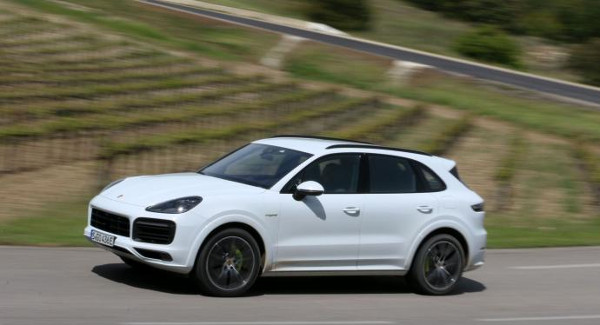
Porsche Cayenne Hybrid 2018. No diesel for the moment, under the hood of the new Porsche Cayenne. In contrast, the plug-in hybrid is gaining ground and becoming almost inevitable. Inherited from the Panamera, the system here reconciles virtue and performance up with a clear pre-eminence for the time.

In principle, the plug-in hybrid should be the best-selling version of the Porsche Cayenne third of the name, just recently renewed. Like his predecessor, by the way. And even if the Diesel comes back in the range (probable), the tax situation of the hybrid should always ensure some success to the latter. For companies, already: the new Cayenne is approved at 72 g / km of CO2, the TVS is only 144 € per year (a classic Cayenne S is penalized more than 4,000 € per year!). As for individuals, the calculation is simple: the Cayenne E-Hybrid starts at € 92,304, or € 2,000 less than the S. In addition impacted by 10.500 € of penalty! This leaves a small envelope to pick from the catalog of options, as always numerous and expensive. We understand that Porsche is counting on a share of about 80% of hybrid for the sales figures of the newcomer.

Porsche Cayenne E-Hybrid test

And then, the Cayenne E-Hybrid already leaves with some sympathy: in luxury SUVs, Porsche is now the only one to offer a 6-cylinder in a hybrid engine. The Range Rover P400e, the BMW X5 or the GLE 350 e are all satisfied with 4 cylinders much less pleasant.

Chrono side: 2.3 tons catapulted
A reading of the data sheet, one understands even better the advantage that can prevail the hybrid face Cayenne S 100% thermal (440 hp). Not only in view of its 3.2 l / 100 km announced, that we know illusory, or its 44 km announced all-electric. Admit... we still traveled 35 km without waking once the V6 which is sufficient in everyday use.   

Porsche Cayenne E-Hybrid test

It is especially the performance side that the E-Hybrid impresses, despite its extra 300 kg related to batteries and devices charging system: 5 s to clear the 0 to 100 km / h, 2 tenths better than the S.

No surprise about the mechanics, borrowed from the Panamera 4 E-Hybrid: in this case, the well-known 3-liter V6 (340 hp), rather musical especially if we opt for the sport exhaust that fitted our model, associated with an electric motor of 136 hp. The combined power amounts to 462 hp, as for the sedan. Same for the maximum torque: 700 Nm when both engines operate simultaneously, with an impressive thrust to the key. The least revival is masterful! To reassure: the button Sport Response, at the bottom of the steering wheel, is always present (as on the rest of the range). Except that it activates here an electric boost, and no longer the pre-charge turbos. We are still at Porsche, put a motor electric to a 6-cylinder must above all serve the time!   

Porsche Cayenne E-Hybrid test

The engine approval also benefits from the remarkable management of the Tiptronic S, an evolution of the automatic ZF 8-speed gearbox already seen on the Panamera, which contributes to smooth running. No need here for the speed of a dual-clutch transmission, the beefy pair more than compensates for the slight latency that can be found with the most economical Hybrid mode and that disappears completely in Sport or Sport +, the latter being even caricatural in its management, for an SUV of this size. A Cayenne, it is wide. Its vocation, all hybrid is it, remains to evolve on major axes and to enchain long routes motorway.

What's left of Cayenne S?
A little more rigor when the road begins to turn. Fatally, even if its 2,295 kg are perfectly held by the piloted suspension, the slightly firmer calibration results in a comfort less felted on bad road especially in the filtering of large irregularities. Marginal reproach, of course! But by adding less agility (the inertia is felt at a good pace, making 4-wheel steering a highly recommended option) and variations in consistency of the brake pedal(Sometimes you have to worry about the consistency of the brake pedal, which varies depending on the state of charge and the needs for energy recovery), the E-Hybrid can not boast of the remarkable homogeneity of a motorized Cayenne. classic thermal. While looking at rivals dynamically, let's recognize it.

Porsche Cayenne E-Hybrid test

Finally, it will also count with 125 l less for luggage. The double bottom floor being occupied, the volume is reduced to 645L. Still one of the largest in the category, that said. On board, the refinement remains identical to any Cayenne, except for a few details specific to the E-Hybrid: the "acid green" needle of the central rev counter (only instrumentation always anaological), echoing the brake calipers and exterior lettering. Of course, the driving mode management system now includes several sub-menus designed to force the walk in all-electric (E-Power), preserve the battery, or trigger charging via the thermal (attention, the consumption grime then very quickly).

At the pump
The hybrid is above all a clever way to evade the governmental penalty, to enjoy a mechanical approval and performance largely comparable to the Cayenne S. In itself, the interest of the hybrid in terms of energy balance is interesting only in a context of frequent refills (between 7 and 8 am on a domestic socket, 2:30 on a terminal 32A or wallbox). As with all plug - in hybrids, it is possible to travel from home to work without consuming a single drop of gas, and to reserve the 75 - liter range of the tank for weekend trips.

Porsche Cayenne E-Hybrid test

We thus raised 10.5 l / 100 km of average at the end of our test on a rather demanding course, and making the most of the resources of the 462 hp: about 250 km traveled on moderately hilly departmental roads and highway, with a complete load and an extra charge of about 30% during the course.

PLUS:
  • Engine approval, performance
  • Interesting sobriety
  • Tariff position


MINUS:
  • Weight
  • Expensive and numerous options
  • Feel of braking


Balance sheet
Paradoxically, the most techno Cayenne is also the most economical! The table would be even more favorable with at least a good quintal less. That said, performance and preserved engine enjoyment mark the spirit more than its consumption figures. At Porsche, there is no question of sacrificing the time, therefore.

Volkswagen T-Roc 2018, A part of Golf

Volkswagen T-Roc 2018, A part of Golf

Never satisfied despite a plethoric range, Volkswagen has just launched its new T-Roc, a raised vehicle midway between an urban crossover and a compact SUV. A model with great ambitions that we tried during a journey of 2,000 km. The best way to dominate a segment is always to invent it. A credo become legion among German manufacturers, accustomed in recent years to multiply models. 

Volkswagen is an exception to this Germanic rule, the Wolfsburg builder staying true to its sober side. Leaving behind the competition, especially in small crossovers and SUV.

It will have been necessary to wait until the end of last year to finally see Volkswagen invest this segment of urban vehicles raised with the T-Roc. Bigger (4.23 m) than the Renault Captur, Peugeot 2008 and Citroën C3 Aircross which will be the rivals of the future T-Cross, but smaller than a Tiguan, the T-Roc denotes in the range.

Volkswagen T-Roc 2018, A part of Golf

Good and less good
By its style already, more trendy and less classic than the usual productions of the brand. Its beveled three quarter rear, its indicators integrated in the rims of the air intakes of the front bumper, its colorful hues or its flag dissociated dissociate it very frankly from the Golf, with which it shares the same platform. 

The cabin as for him returns more in the row. The presentation is rather simple and modern with the famous digital slab, but it is imperative to check the box dashboard and colored door panels (optional) to brighten a very dark set. But practical with plenty of storage such as the drawer under the passenger seat.

Volkswagen T-Roc 2018, A part of Golf

The bad surprises come rather hard plastics profusely in the cockpit or a space with the legs disappointing for a vehicle of this type. Defects that are not found on the Golf, yet the same size and sold at the same price.

Same thing for the trunk, which because of the all-wheel drive, loses 53 liters to reach a load volume of 392 l, less for example a Peugeot 308. All for a basic modularity 1/3 2/3.

Volkswagen T-Roc 2018, A part of Golf

The all-wheel drive, a necessity?
A trunk down and a weight up (1.455 kg) with the 4Motion. Adjustable in several modes, the all-wheel drive offers excellent traction on all surfaces and when the road is wet. 

The reverse of the medal, the agility of the T-Roc is partly amputated. While the SUV still has a good level of dynamism but changes in support are less responsive and the front train suffers from a registration curve less easy, relegating it in terms of amenity behind the Golf.

The 4-cylinder 2.0 TDI 150 horsepower also suffers from 4-wheel drive with a propensity to drink more: we found 6.4 l / 100 km on a course of 2,000 km of which only 300 km of city. 

Fortunately, thanks to his generous torque and his perfect agreement with the DSG7 box, he does not mind the task when it comes to relaunch the beast to start the fire or double on the highway. Provided to turn off the Stop & Start, too slamming to re-acceleration, and not be too much looking at the high volume of fuel oil.

Volkswagen T-Roc 2018, A part of Golf

Comfort and prices... Golf!
Finally, the good road surprise of the T-Roc concerns its driving comfort. With optional damping (1,440 €) and despite 18-inch wheels, it is comfortable on all surfaces, including the most degraded roads and even dirt roads. The usual firmness to the German has moved rather in leather upholstery Vienna (€ 1,670), very pretty to the eye but uncomfortable on long trips.

And the prices in all this? Sold from 21.990 € with the 1.0 TSI 115, the T-Roc climbs up to 38.950 € for the upscale 2.0 TDI 4Motion DSG7 Carat Exclusive. Our trial version 2.0 TDI 4Motion DSG7 First Edition is sold for € 35,830, sum to which we must add 5,000 euros of options.

The latter is still well equipped standard with 18-inch wheels, the digital panel, the infotainment system with navigation and internet, the adaptive controller or the recognition of panels. Only missing on the call, keyless start and reverse camera still available on other finishes.

Balance sheet
The Volkswagen T-Roc represents a more modern alternative to the very classic Golf and its reference approval. But for this choice to be really justified, it will probably forget the diesel and all-wheel drive to benefit from a larger trunk, a lower mixed consumption and a lighter weight. Question of choice, and needs!

HONDA CB 750: The Revolution

HONDA CB 750: The Revolution

It is impossible to speak motorcycle without addressing the one that has changed everything (or almost): 4-cylinder in line, disc brake, design, manufacture, performance and grip, the "oven" laid the foundations of the modern bike.

HONDA CB 750

To understand the shock provoked by Soichiro Honda, we must immerse ourselves in the 1969 Special Summer Motorcycle Review. Here is what was written: "The Honda crystallizes most of the modern motorcycle. It's the big engine that the motorcyclists were waiting. The 750 is a very beautiful bike coupled with a superb piece of mechanics. Honda has just given a new direction to the "Moto" with a big Mr. Si in 1965, its CB 450 rivals already with the English, the CB 750 K0 is ahead of the competition with this machine that some already saw straight from Mike Hailwood's RC181. But in the absence of a double ACT engine, 24 valves and horses to know more than what to do, the brand unveils, in spring 69, a 4-cylinder with single ACT and 8 valves of 67 horses. And if, on paper, this does not seem to be a revolution for the end of the 60's, it's actually a big step towards the modern motorcycle produced in mass production. Solutions such as the compact 4-cylinder long stroke (with dry sump) inserted into a double steel cradle frame, and the presence of a hydraulically operated disc brake attest to this.

HONDA CB 750: The Revolution

The 4-cylinder dry sump develops 67 horsepower. A real revolution as mechanical as aesthetic. Character, performance and style that will open a new path and give birth, a few years later, pure and hard sports.

A real break in the motorcycle world
"From 5,000 rpm, the speed at which the horses really come in numbers, the reps on all the gears are extraordinarily nervous and allow instant overruns. Roadholding and braking perfectly meet the expectations of a major road sports owner. Mass is said and yet, Honda keeps reviewing its copy. Between June 69 and June 70, the CB 750 will receive 300 changes! Then, new versions will come with the K1, K2 and K6 then the F1, K7 and F2, the latest produced in 1971. For information, the K series is characterized mainly by its 4-2-4 exhausts, when F have a classic 4-in-1. In total, 553,400 units will come out of the world's No. 1 channels. But for the purists, K0 represents the symbol of a major shift in the world of motorcycles. There is undoubtedly a before and after CB 750.